
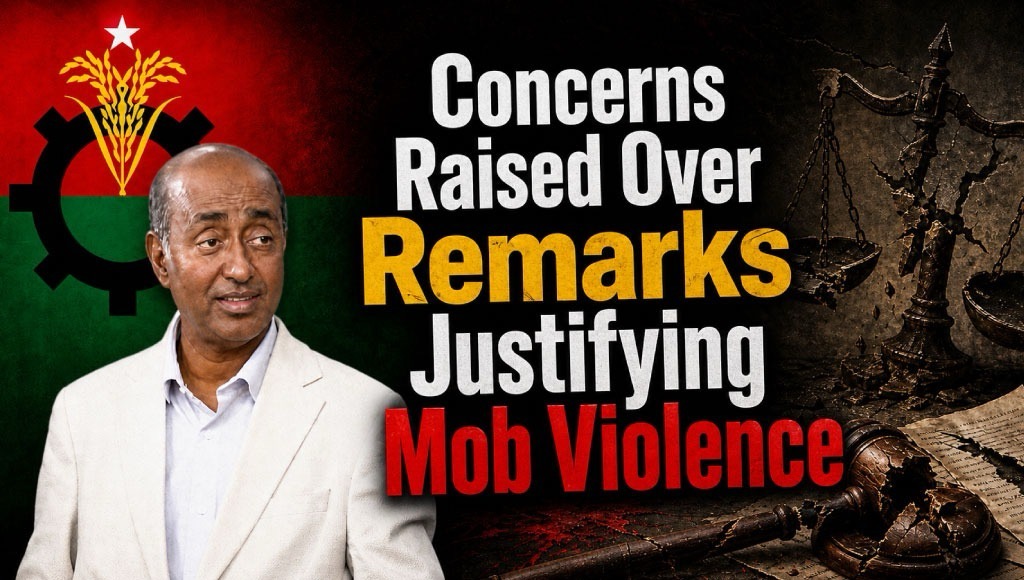
Comments by BNP figure Asaduzzaman, who has described himself as a Law Minister, have sparked concern after he characterised mob violence as a “reaction of the people.”
Legal experts say such remarks are significant, as the role of a law minister is typically to uphold the rule of law and challenge impunity. By framing mob actions as a form of public response, critics argue, the statement risks normalising acts that would otherwise be considered criminal.
Questions have also been raised about how such a “reaction” would be defined — who determines its legitimacy, and what limits, if any, would apply.
The remarks come amid reports of violence affecting minority communities since August 2024, including allegations of arson, vandalism of religious sites, land seizures, and killings. Critics have questioned whether these incidents could also be interpreted as “public reaction,” and if so, whose voices are being represented.
Asaduzzaman has reportedly described such incidents as “not systematic” or “widespread.” However, international organisations, including the United Nations and human rights groups, have published reports documenting patterns of violence, leading some observers to challenge that assessment.
The controversy also intersects with broader political tensions. The BNP, founded in 1978 by former president Ziaur Rahman following a period of military rule, has faced longstanding criticism over past allegations of corruption and links to political violence — claims the party has contested.
Attention has also turned to the general election held on 12 February 2026. The vote took place in the absence of the Awami League, which had been banned, while several other political groups boycotted the process. Reports and images from polling stations suggested low voter turnout, raising questions among analysts about the extent of public participation.
In this context, some observers argue that describing mob actions as the “voice of the people” is particularly contentious, especially when debates over political legitimacy remain unresolved.
Analysts note that history offers examples where the use of extra-legal force has led to further instability. They warn that framing violence as a legitimate response could have broader consequences for governance and the rule of law.