
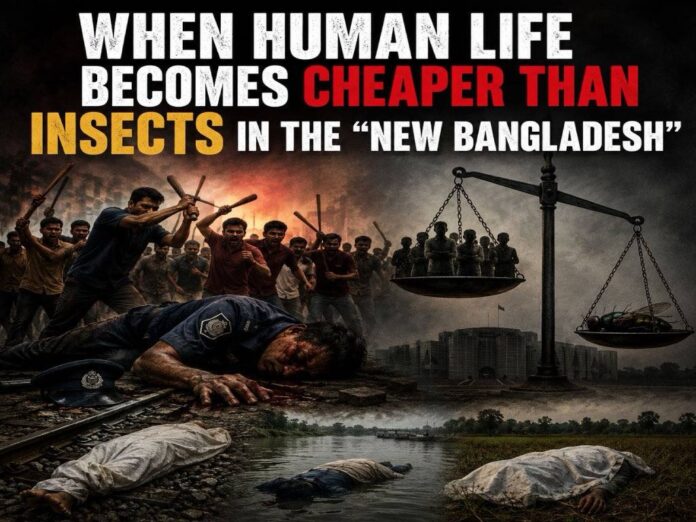
Sixty-nine incidents of mob violence in a single month. Thirty-two people were killed. Fifty-three unidentified bodies recovered. Is this Bangladesh in 2026, or a return to the nightmare many associate with the 2001–06 era? According to a recent report by the Manabadhikar Shongskriti Foundation (MSF), mob killings and vigilante violence have risen sharply, while dozens of unidentified bodies continue to be found across the country.
On 12 February, amid a boycott by large sections of the public and with major political parties excluded from the process, the BNP and Jamaat formed a government through what critics describe as a self-orchestrated electoral arrangement. One party traces its origins to a military-backed political order, while the other carries the legacy of its controversial role during the 1971 Liberation War and subsequent war crimes proceedings.
The MSF report suggests that even members of law enforcement agencies are now becoming targets of mob attacks. Citizens are increasingly bypassing the courts and taking matters into their own hands. The organization warned that the growing reliance on vigilante justice reflects a weakening respect for legal institutions and the rule of law.
Human rights monitors recorded 69 separate mob violence incidents in May alone, resulting in 32 deaths and 71 serious injuries. The report also documented the recovery of 53 unidentified bodies from rivers, railway tracks, roadsides, and fields across the country, raising concerns about unresolved crimes, investigative failures, and broader security challenges.
In 2001, attacks on Hindu families and communal violence became defining concerns for many observers. In 2026, the images are different, but the fears remain: bodies appearing in rivers, on railway lines, and in open fields. Critics argue that while the methods may have changed, the political forces accused of fostering instability remain familiar.
The broader trend has alarmed both rights organizations and members of the public. Reports from MSF and other monitoring groups indicate a sustained rise in mob violence over recent months, while public discussions increasingly focus on concerns over law and order, accountability, and the state’s ability to maintain public security.