
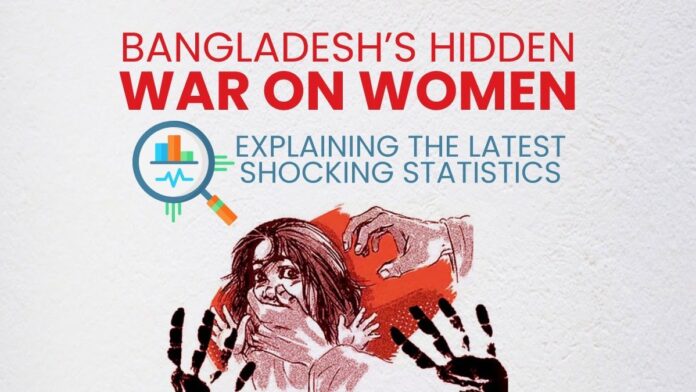
Bangladesh has once again been jolted by a grim reminder of the violence that women and girls continue to face on a daily basis. A half-yearly report published by Bangladesh Mahila Parishad (BMP) reveals that between January and June of this year, 1,555 women and girls became victims of violence. The data, compiled from reports in 15 national dailies, not only highlights the magnitude of the crisis but also reflects a systemic failure to protect women and ensure justice.
The Statistics at a Glance:
- Total victims (Jan–Jun 2025): 1,555 women and girls
- Rape cases: 481 (including 345 children)
- Gang rapes: 106 (including 62 children)
- Rape-murders: 17 (including 10 children)
- Murders: 320 (including 61 children)
For June alone:
- 203 women and girls were subjected to violence
- 65 rapes, including 43 children
- 8 gang rapes, including 5 children
- 3 rape-murders, including 2 children
- 7 attempted rapes of children
These figures, horrifying as they are, may only represent the tip of the iceberg, given the stigma and silence that often surround such crimes.
Why This Report Matters
The BMP report is not merely a collection of crime statistics — it is a reflection of deeper structural and cultural issues. The high proportion of child victims underscores a particularly harrowing trend: even the youngest are not spared from gender-based violence.
Such reports serve three critical functions:
- Documenting the scale of violence in a society where many cases remain unreported.
- Pressuring policymakers to take action beyond rhetoric.
- Raising awareness to challenge the normalization of violence against women.
The Root Causes: Beyond the Numbers
Several interconnected factors drive this cycle of abuse:
- Weak enforcement of laws – Although Bangladesh has strict laws, including the Women and Children Repression Prevention Act, convictions are rare and trials drag on for years.
- Social stigma and victim-blaming – Survivors often face shame and ostracization, discouraging them from filing complaints.
- Patriarchal norms – Deep-rooted cultural attitudes often minimize or excuse male violence.
- Impunity and political influence – Perpetrators, especially those with connections, frequently escape accountability.
The Human Cost
Behind every statistic lies a shattered family, a silenced child, or a young life cut short. Survivors who do live carry invisible scars: trauma, social isolation, and loss of opportunities. For child victims, the consequences are even more severe, shaping the rest of their lives.
The report’s numbers are not just numeric figures. They demand recognition of the human suffering that has become normalized in daily life.