
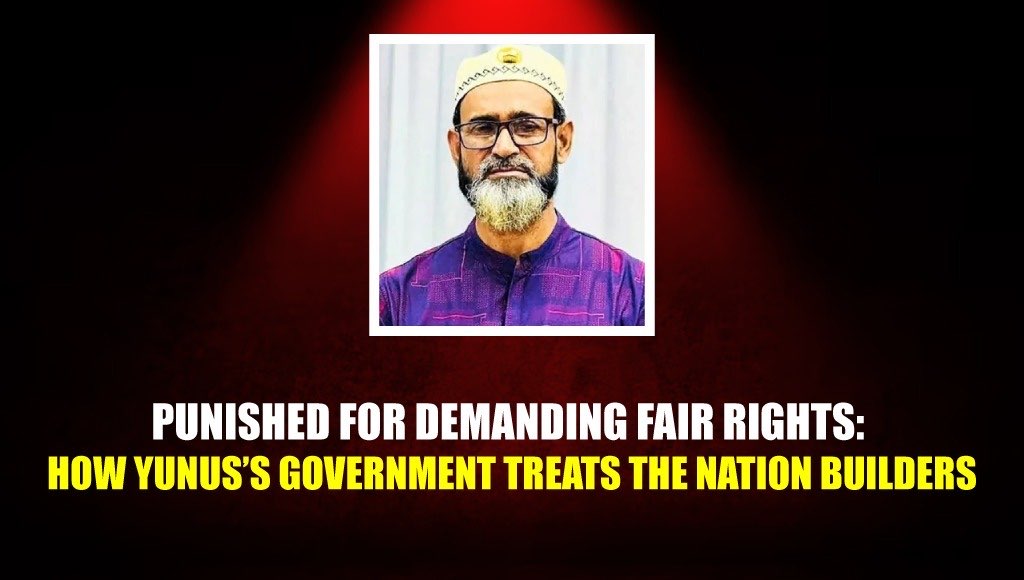
A fresh wave of repression has hit the assistant teachers of primary schools who are protesting with a three-point demand. Teachers leading the movement have been transferred 350 miles away. It looks like a blatant act of retaliation, where the effort to secure legitimate rights is treated as a crime.
A transfer from Mymensingh to Barishal or Jamalpur is not just an administrative order. It means tearing a teacher away from their family, their children, and their elderly parents. It means punishment. It means turning them into an example so that others get scared and back out. But what crime did they commit? Is it a crime to demand what they are owed? Is this how people who serve the public by educating its children deserve to be treated?
When teacher Abul Kashem says he is not shaken, the firmness in his voice reflects the voice of hundreds of thousands of teachers across Bangladesh. When he says he is ready to go to court, it shows that teachers in this country will no longer silently accept injustice. But the question remains: why should a teacher even have to think about legal action just for raising a fair demand?
Has the so-called interim administration running the country thought about the long-term impact of this hardship on teachers? How can a teacher give proper attention to children in the classroom when he is worried about his own child’s studies, his sick parents, or basic survival? How can a teacher inspire students or help them dream when he fears being transferred at any moment?
The way this so-called reformist government under Yunus is treating teachers is a serious insult to democracy and human rights. People talk about the July 2024 unrest, where hundreds of youths were killed, and claim that this government rose to power on that bloodshed. What was the purpose of that violence? To establish people’s rights or to impose a new authoritarian rule?
In a country where teachers are not respected and the nation’s builders are treated with such cruelty, the future is easy to predict. Teachers are not only asking for higher salaries or benefits. They want to live with dignity, take care of their families, and create a better learning environment for their students. Is that too much to ask?
The Primary Education Directorate’s circular ordering these transfers gave no explanation. When the Mymensingh primary education officer says, “The transfers were made considering the situation, there is nothing we can do,” it becomes clear that this was a planned move. Even field-level officials can see the injustice but are helpless.
This movement did not start suddenly. It grew from years of resentment, neglect, and disrespect. They did not hold students hostage, nor did they stop exams. They continued teaching. So why such harsh action? The reason is simple: those in power do not want anyone to question them or challenge their decisions.
Since the coup carried out with foreign funding, military support, and help from extremist groups, the country has been suffering a severe breakdown of democracy, human rights, and the rule of law. The way the elected government was overthrown violated not only the constitution but also the people’s right to vote and their voices.
Yunus, who built his global fame by running interest-based microcredit schemes on the backs of the poor, does he truly care about the people? Or is he only busy serving his foreign patrons? His treatment of teachers suggests that he may have taught people how to carry the burden of debt but never taught the value of dignity or respect.
More than a hundred teachers have already been transferred, and many more may follow. This climate of fear will not end well. History shows that a government that turns against its own people, that crushes the fair demands of teachers, students, and workers, cannot survive. Repression never brings peace. It only stokes anger and resistance.
When teacher Abul Kashem says he will return home only after achieving their demands, his words carry the resolve of a true fighter. When he says he is prepared to go to jail if needed, it becomes clear that teachers in this country are no longer afraid. But the sad truth is that, in the twenty-first century, in independent Bangladesh, a teacher is having to consider going to jail just to demand fair treatment.
Source: kalbela