
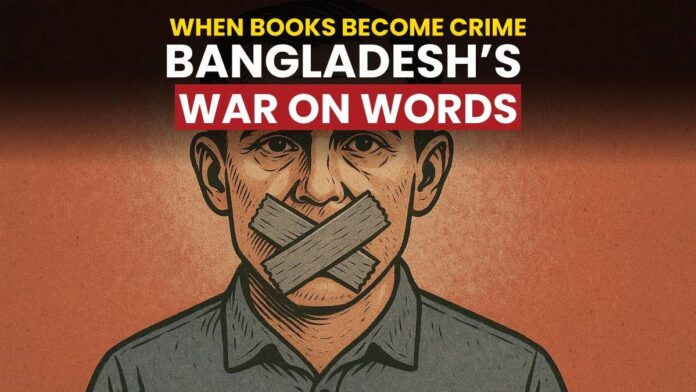
From the soft whisper of rustling pages to the bold ring of phone calls, any expression in words is now treated as a threat. In the land known for its spiritual resilience, Bangladesh’s interim government has turned books and speech into high crimes—exposing a crackdown that scorches the soul of dissent.
A Ban on Speeches, a Silencer on Democracy
When exiled former Prime Minister Sheikh Hasina addressed her supporters from New York, the state responded with silence—literally. A special tribunal prohibited the publication of her speeches, ordering their removal from all media platforms, citing fears of interference in ongoing trials.
Bangladesh court bans publication of speeches by ousted Prime Minister Hasina | AP News
A Mass Revocation of Journalistic Identity
Freedom of the press took a historic blow when the interim government revoked accreditation from 167 journalists—effectively barring them from reporting on government activity. Rights organizations denounced the move as state-sanctioned censorship.
Rights groups condemn Bangladesh for canceling accreditation of 167 journalists | AP News
Laws That Redefine Truth as Crime
Under the new Cyber Security Act (CSA), dissent is legal suicide. Loosely worded clauses enable arrests for “hurting religious sentiments,” “false propaganda,” or “threatening national image”—all punishable by years behind bars. Despite claims to reform, human rights groups say these laws are mere repackaging of draconian predecessors.
Bangladesh: Interim Government must restore freedom of expression | Amnistia Internacional | Venezuela
Freedom of Expression in Bangladesh: Legal Barriers and State Control – IJLSSS
Writers, Journalists, and Books as Battlegrounds
The cost of dissent is steep. Poets, essayists, and journalists—once the conscience of the nation—face arrest, intimidation, and worse. At a recent book fair, extremists razed a stall selling secular and progressive literature, delivering a chilling message on the fragility of intellectual freedom.
Human rights bodies have spotlighted violent attacks on journalists: one in Shariatpur was assaulted with a hammer after reporting on negligence at a clinic; others faced bamboo stick beatings and gunfire.
Media Figures Under Siege
Journalists are being railroaded into courtrooms. Editor Nasima Khan Monty, her husband, and daughters were all slapped with travel bans and bank investigations. Other media professionals—like Julfikar Ali Manik and Sumi Khan—have been targeted over their secular and investigative work. Claims of links to extremist groups and politically motivated charges are common.
A Deepening Chilling Effect
Self-censorship is no longer a choice—it’s survival. Civil society organizations warn that books, speeches, and even casual social media posts are now treated as weapons. The “DB Review Committee,” set up to screen reading material, epitomizes this lens of suspicion: reading and writing are now framed as potential crimes, and knowledge is viewed as dangerous.
A Dossier on Human Rights Violations in Bangladesh Under the Interim Government
The Silence That Terrifies
When language becomes illegal, democracy dies in darkness. Bangladesh’s crackdown on words—not war or walls—is perhaps its most ominous threat to date. This isn’t just censorship—it is the methodical erasure of dissent.
Unless these repressive laws are repealed and freedoms restored, Bangladesh risks becoming a place where silence isn’t golden—it’s enforced. And the people? They’re paying with their voice.